
ESP
Valorant Wallhack Features — Boxes, Skeletons, and Snaplines
Wallhack is the plain-language term for ESP that draws enemy positions through geometry. Here is how box types, skeleton modes, and snaplines differ — and how to tune them so you get info without screen clutter.
Get Access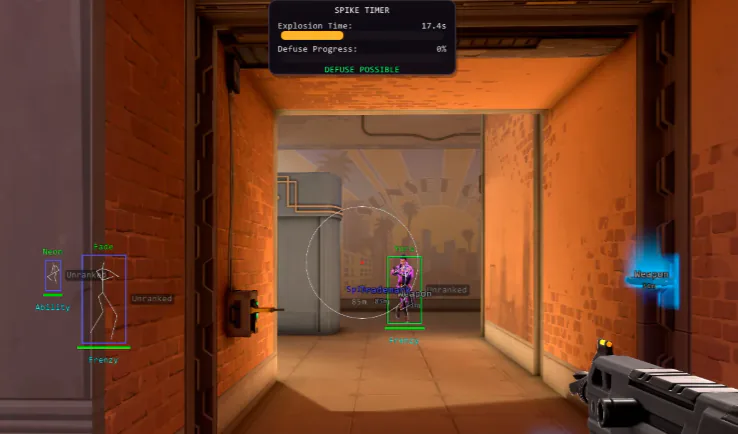
Box ESP: normal, cornered, and 3D
Normal boxes draw a full rectangle around an agent. Cornered boxes show only L-shaped corners — less visual noise when multiple enemies stack. 3D boxes extend depth cues so you can tell if someone is on a platform or below you on Haven or Split.
Valorant Cheats supports box type, line style (full vs outline), and thickness toggles. Start with cornered boxes at medium thickness, then add player name and distance tags once you are comfortable reading the overlay.
Skeleton ESP and head circles
Skeleton overlays show bone lines — strong for reading crouch vs stand and pre-fire timing. Outline and glow modes help on bright maps like Breeze; RGB modes are flashy and best kept for clips, not Ranked.
Head circles mark aim height without full skeleton noise. Combine skeleton ESP with 2D radar so you know when to wide-swing vs hold angle.
Snaplines, gadget ESP, and streamproof
Snaplines connect enemies to your crosshair or screen edge — useful for quick scans, distracting if every line is on. Gadget ESP flags turrets, traps, and spike location; toggle attacker gadgets separately from player ESP.
Enable streamproof before recording if you share gameplay. Save profiles with load config after you tune wallhack categories per map. Full toggle list: Features. Buy access: Valorant Cheats.
Official game guides & resources
We link to trusted third-party sources so you can verify patch notes, player stats, and map info outside our site.
- Valorant on PC Official store page, system requirements, and player reviews.
- Valorant patch notes & news Read official update posts before you change your loadout.
- Official Valorant website Game overview from Riot Games.
- Valorant Wiki (Fandom) Player stats, maps, and agent abilities.
- Valorant community hub Announcements and community discussions.